Loading this game…


// fact_sheet
- Published
- 2010
- Designer
- Volko Ruhnke
- Publisher
- GMT Games
- Players
- 1–2
- Play time
- 3 hr
- Categories
- Modern Warfare, Political, Wargame, Action / Event, Action Points, Area Majority / Influence, Campaign / Battle Card Driven, Command Cards, Dice Rolling, Events, Hand Management, Point to Point Movement, Scenario / Mission / Campaign Game, Simulation, Solo / Solitaire Game, Stat Check Resolution, Sudden Death Ending, Tug of War, Variable Player Powers
- Weight
- 3.7 / 5
Tabletop · 2010
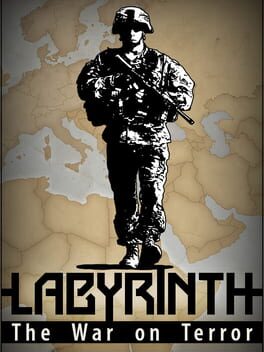
Labyrinth: The War on Terror, 2001 – ?
—
Not enough ratings yet
// publisher_description
2001: The American Century had closed with a single Cold War superpower standing and a pause in conflict that some at the time dubbed The End of History. It wasn’t. In the Middle East and South Asia, an Islamic revival was underway. Resentments bred in part of US support for the regions’ anti-Soviet tyrannies soon erupted into a new struggle against the West. Wealthy Saudi fanatic Usama bin Ladin issued a declaration of holy war against America in 1996 and then fired the first shots with spectacular terrorist attacks in 1998 and 2000. By 2001, al-Qaeda had set in motion even more devastating strikes — this time within the US Homeland — that Bin Ladin hoped would light off a global Muslim uprising. Uprising or not, the Western response to those September 11th attacks would reshape international affairs from London to Jakarta and from Moscow to Dar es Salaam.
Labyrinth is a card-driven boardgame simulating at the strategic level the ongoing bid by Islamic extremists to impose
their brand of religious rule on the Muslim world. In a 1-player game, the player portrays the United States and its allies battling the extremist jihad. In a 2-player game, the second player takes on the role of the Jihadist.
In pursuit of these goals in the game, players use strategy cards to undertake operations or cause events to happen. A hand of cards in Labyrinth simulates roughly a year. Each side has 3 different win conditions, so players can choose how long and how hard to make the game.
The gamebook contains multiple scenarios for the players. Labyrinth features distinct operational options for each side that capture the asymmetrical nature of the conflict, while the event cards that drive its action pose a maze of political, religious, military, and economic issues.
--description from publisher